How Keycaps Are Made: Double-Shot, Dye-Sub and Laser-Etched Explained
By Jota Martínez • • PBT vs ABS Keycaps
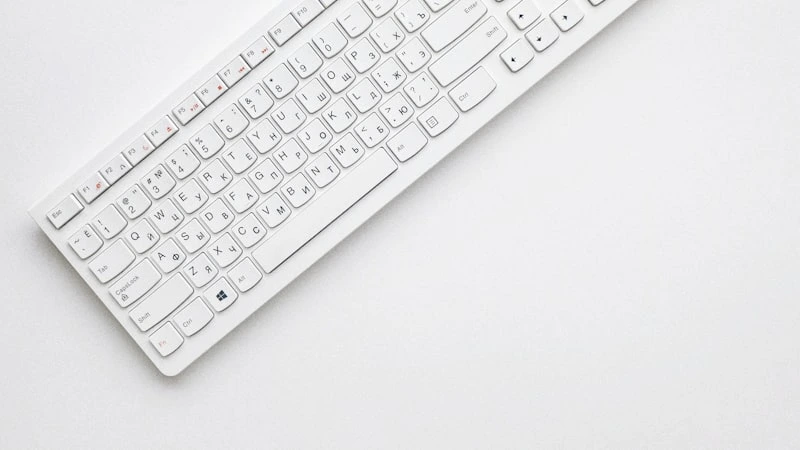
The letters and symbols on your keycaps — collectively called legends — are not painted on. Or rather, sometimes they are, which is exactly why they fade so quickly on cheap keyboards. Understanding how legends are applied explains why a $150 keycap set outlasts a $30 stock set by years, and why some keycap sets can only be made in certain colorway configurations.
There are four main legend manufacturing methods in use today: double-shot injection molding, dye-sublimation, laser etching, and pad printing. A fifth method — UV printing — is emerging for specialty sets. Each has a distinct process, durability profile, and cost structure.
This article explains each method at a depth that's actually useful — enough to understand what you're buying and make informed decisions when comparing keycap sets.
The Main Legend Manufacturing Methods
Before diving into each technique, it's worth understanding the fundamental problem they're all solving: how do you permanently attach a legend to a plastic keycap in a way that survives millions of keypresses, daily friction from fingers, cleaning products, and UV light exposure? Each method solves this differently — and that difference directly determines how long your keycaps will look good.
Double-Shot Injection Molding
Double-shot is the gold standard of keycap legend methods. The name describes the process precisely: the keycap is manufactured using two separate injection molds in sequence. First, the legend shape is molded in one plastic color. Then, the outer keycap body is injection-molded around it in a second color, encapsulating the legend piece inside.
The result is a keycap where the legend is literally a separate piece of solid plastic — not ink, not dye, not etched material. No surface treatment can fade, because there is no surface treatment. The legend is structural. You could sand the top of the keycap down and the legend would still be partially visible as a different-colored layer underneath.
The trade-off is cost and design complexity. Two-mold tooling is expensive, and the legend must be achievable in the mold shape — intricate characters or very fine lines can be difficult to execute. Well-known double-shot sets include GMK (ABS), KAT (ABS), and ePBT double-shot (PBT). This method works on both ABS and PBT plastic.
Dye-Sublimation
Dye-sublimation (dye-sub) is a heat transfer process. Ink is heated to a temperature where it converts directly from solid to gas (sublimation) and penetrates the surface of the plastic, bonding with it at a molecular level. The result is a legend that is embedded in the plastic itself — not on top of it.
The critical constraint of dye-sub is that it only works reliably on PBT plastic. PBT has a higher melting point than ABS, which means the sublimation temperature (around 200°C) can be reached without melting the keycap itself. On ABS, the temperatures required would warp the keycap before the dye fully penetrates.
A second constraint: dye-sub can only produce legends that are darker than the base keycap color. The process dyes the plastic — it cannot lighten it. This is why you'll never see dye-sub keycaps with white legends on a dark base. Popular dye-sub sets include Infinikey and some Keyreative colorways. Durability matches double-shot — legends embedded in the material won't fade regardless of use.
Laser Etching
Laser etching uses a focused laser beam to burn or ablate (vaporize) the surface material of the keycap, creating a legend by removing material rather than adding it. The resulting legend is a physical depression or discoloration in the plastic surface.
Durability depends on the specific technique. Bare laser etching creates a depression that is part of the plastic structure — it won't fade, but the contrast can be subtle. Many manufacturers fill the etched area with paint or ink (called laser-engraved + filled), which improves readability but introduces a fill material that can wear over time. Quality laser-filled keycaps are significantly more durable than pad-printed ones, but fall short of double-shot or dye-sub for long-term legend longevity.
Pad Printing
Pad printing (also called tampo printing) is the simplest and cheapest legend method. A silicone pad picks up ink from an etched plate and stamps it onto the surface of the keycap. The result is ink sitting on top of the plastic — not embedded in it, not structural.
This is the method used on the vast majority of budget keyboards and factory-stock keycaps. It produces sharp, colorful legends at very low cost — and those legends will visibly fade with heavy use, typically within 1–3 years depending on usage intensity. If you've ever seen a keyboard where the letters on Q, W, A, S, D, and E have disappeared, you've seen pad-print failure in action.
| Method | Durability | Cost | On ABS | On PBT | Example Sets |
|---|---|---|---|---|---|
| Double-Shot | Permanent | High | ? | ? | GMK, KAT, ePBT |
| Dye-Sub | Permanent | Medium | ? | ? | Infinikey, Keyreative |
| Laser Etched | Good–Very good | Low–Medium | ? | ? | Many mid-range sets |
| Pad Print | Fades with use | Very low | ? | ? | Stock OEM keycaps |
What About UV Printing?
UV printing (UV inkjet) is a relatively new method that uses ultraviolet-cured ink applied directly to the keycap surface by an inkjet-style printer head. Unlike dye-sub, it can produce full-color photographic images and multicolor gradients on a single keycap. Unlike double-shot, it requires no molds — making it accessible for small-batch and artistic custom sets.
Durability is the variable. UV-printed legends are more surface-level than dye-sub (the ink bonds to the top layer rather than penetrating deep into the plastic), but better than pad print because the UV curing process creates a harder, more adhesion-resistant finish. Well-executed UV prints can last years with normal use. Expect to see more UV-printed novelty sets and artist collaborations as the method matures.
Which Should You Choose?
The answer depends on your budget and how long you want your keycaps to look new. Here's the practical breakdown:
The legend method is only part of the keycap story. The plastic material underneath matters just as much — read our full PBT vs ABS comparison to understand how material choice affects feel and shine resistance. For a complete picture of keycap design, keycap profiles explained covers the shape differences that affect typing angle and comfort. And if you're ready to shop, see our best mechanical keyboards of 2026.
Frequently Asked Questions
Ready to Upgrade Your Keycaps?
Now that you understand how keycaps are made, see our curated recommendations for the best mechanical keyboards that ship with quality keycaps — no aftermarket purchase required.
See the best mechanical keyboards ?By Jota Martínez • Published June 14, 2026 • See: PBT vs ABS Keycaps → ?
Related Articles
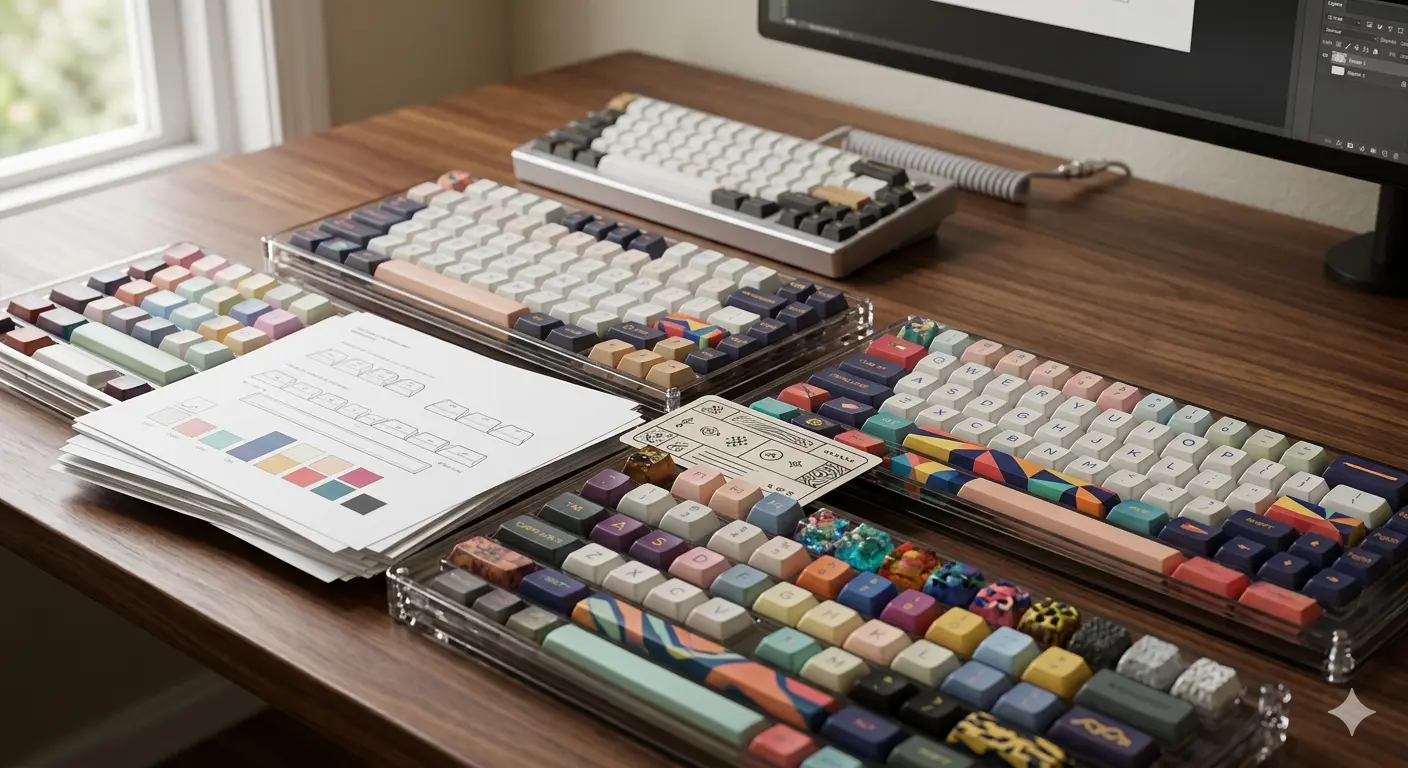
Why Some Keycap Sets Cost $150: Group Buys Explained
Custom keycap sets can cost $150–$250+. We explain group buys, why they're so expensive, the 12-month production timeline, and whether they're worth it.
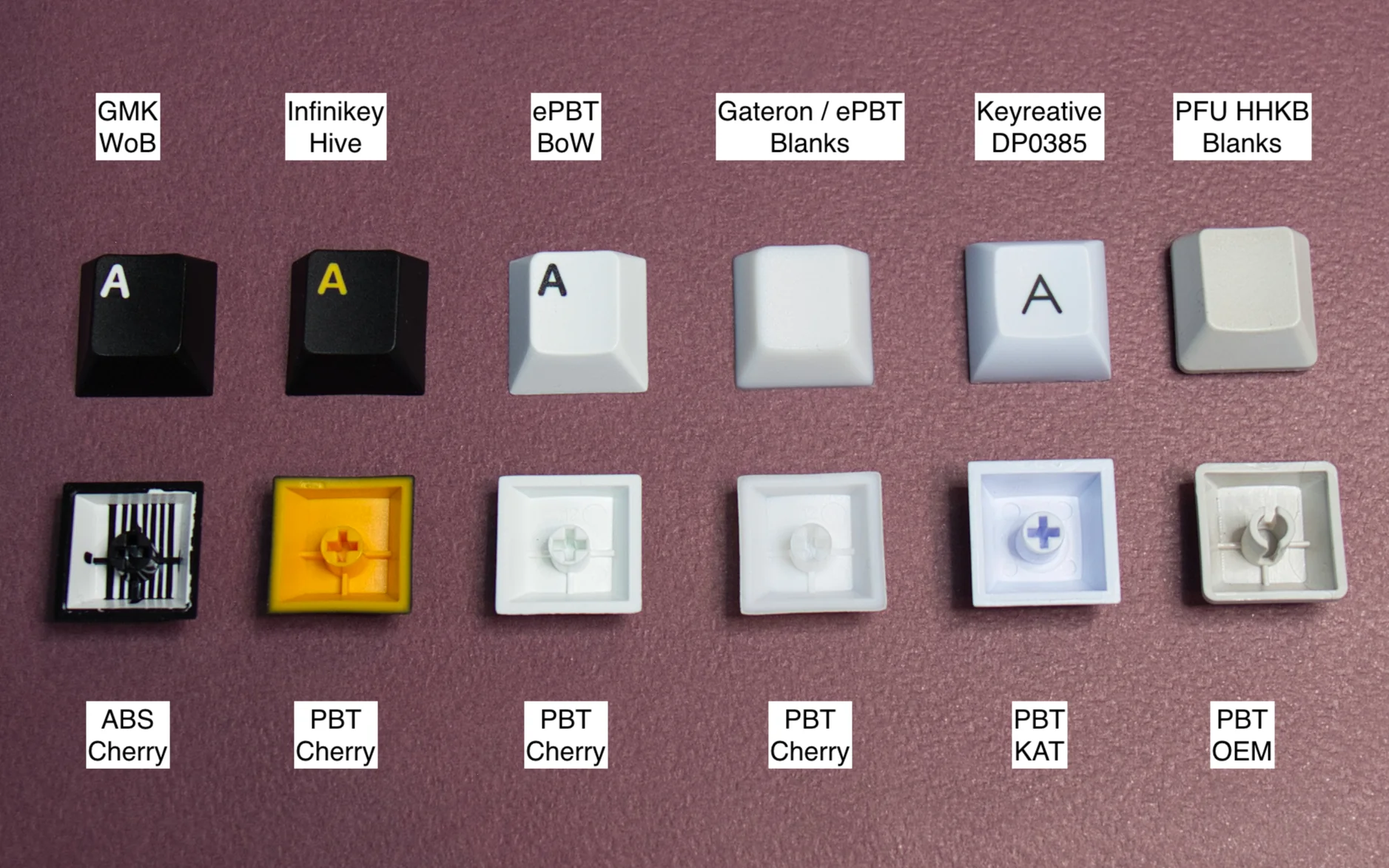
PBT vs ABS Keycaps: Which Material Is Actually Better?
PBT vs ABS keycaps compared: durability, shine, sound, feel and price. Know exactly which material to buy before you spend money on a new keycap set.
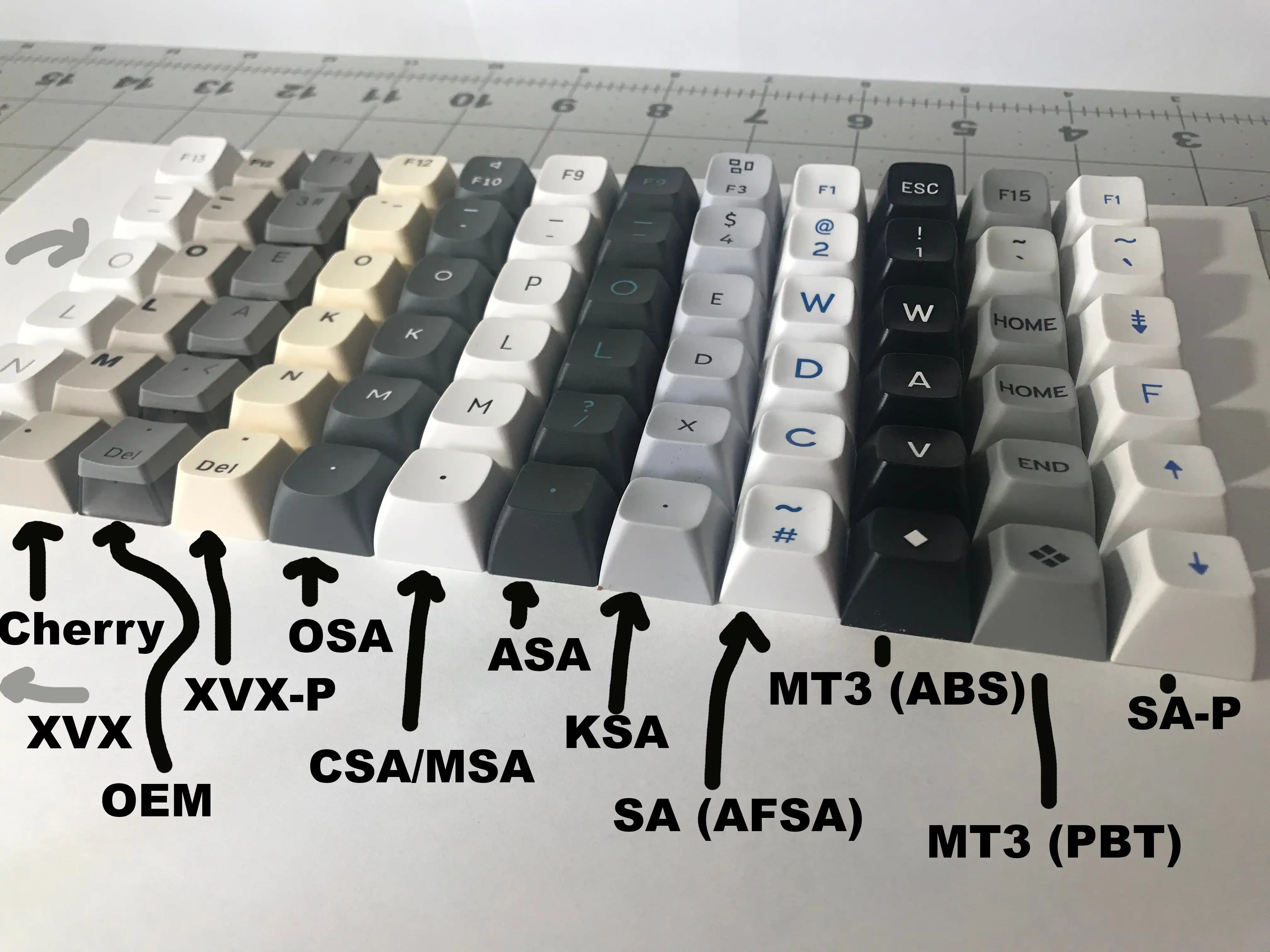
Keycap Profiles Explained: OEM, Cherry, SA, DSA, XDA and MT3
Every keycap profile explained: OEM, Cherry, SA, DSA, XDA, MT3 — height, shape, typing feel and which profile to choose for your typing style and setup.