PBT vs ABS Keycaps: Which Material Is Actually Better?
By Jota Martínez • • Blog
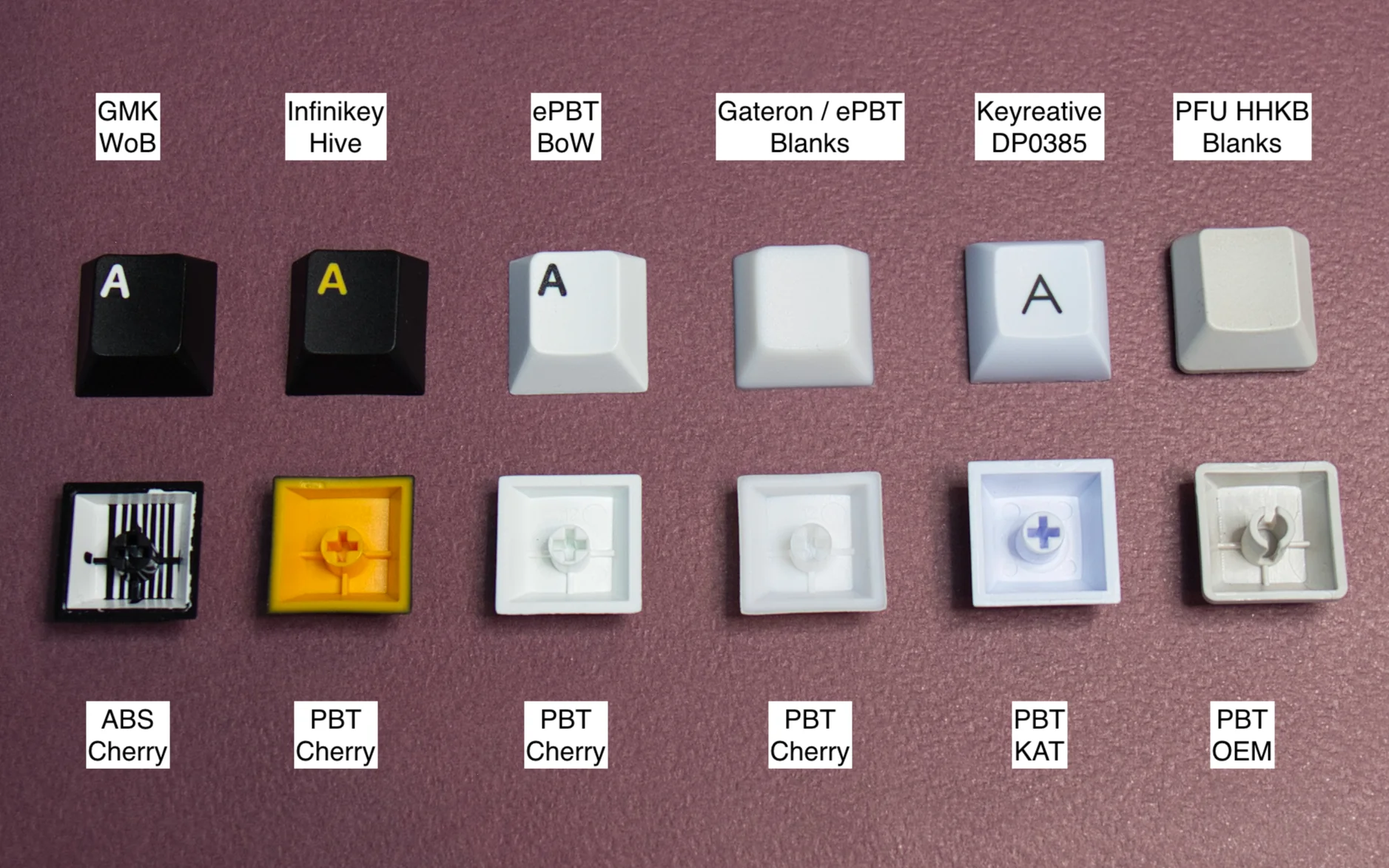
When buying keycaps, the material choice comes before the color, the profile, or the legend style. Get it wrong and a $60 keycap set starts developing an unsightly shine in three months. Get it right and your keycaps will look the same after three years as they did on day one.
The two materials you'll encounter for almost every keycap set are ABS and PBT. They have fundamentally different properties, and knowing the difference makes the choice obvious for most buyers.
ABS Keycaps: The Default
ABS (Acrylonitrile Butadiene Styrene) is the plastic used in the majority of keycaps shipped with keyboards at every price point. It's the same plastic used in LEGO bricks — versatile, inexpensive to mold, and available in a huge range of colors.
Fresh ABS keycaps have a smooth, almost silky feel. They accept dye and paint well, which is why the most vibrant and color-accurate keycap sets (especially double-shot GMK sets) are made from ABS. The legends on double-shot ABS keycaps are extremely crisp and will never fade — the legend color is a second layer of molded plastic, not ink.
| ABS advantages | Wider color range · Crisper legends on double-shot sets · Lower price · More legend manufacturing options (double-shot, dye-sub, laser, pad print) |
| ABS disadvantages | Develops shine with use · Softer material · Slightly higher-pitched sound · Less resistant to solvents |
PBT Keycaps: The Upgrade
PBT (Polybutylene Terephthalate) is a harder, denser plastic that resists the polishing effect that ruins ABS keycaps. Its crystalline molecular structure means the surface stays consistently textured even after years of daily use.
PBT keycaps feel slightly different from ABS on the fingertip — slightly rougher and more matte. Many typists prefer this texture because it provides more friction, keeping fingers positioned more consistently on the home row. The sound profile is also slightly different: PBT keycaps produce a marginally deeper, denser thud compared to ABS.
| The texture reality | PBT keycap texture varies significantly by manufacturer. Cheap PBT (common in budget keyboards) can feel grainy and unpleasant. Premium PBT from manufacturers like Akko, Drop, or EnjoyPBT has a smooth but clearly matte texture that most enthusiasts prefer. |
| The color limitation | PBT is more difficult to dye than ABS, which limits the range of achievable colors. Very vivid colors (bright reds, deep blues, rich greens) are harder to achieve accurately in PBT. This is why colorful, designer keycap sets (like GMK sets) are almost always ABS — PBT simply can't match the color reproduction. PBT is strongest in classic colorways: white, beige, gray, black. |
| PBT advantages | Resists shine and wear · Harder, more durable material · Slightly deeper sound · More consistent texture over time |
| PBT disadvantages | More limited color range · More expensive to manufacture · Legends can be less crisp on some sets · Harder to achieve double-shot (most PBT uses dye-sub) |
Head-to-Head Comparison
| Attribute | ABS | PBT |
|---|---|---|
| Surface feel | Smooth, slightly slippery | Matte, slightly textured |
| Shine resistance | Develops shine in 6–18 months | Resists shine for years |
| Sound | Slightly higher-pitched | Slightly deeper, denser |
| Color accuracy | Excellent — wide range | Limited — best in muted tones |
| Legend durability | Excellent (double-shot) or poor (laser/pad print) | Good (dye-sub, legends last forever if done right) |
| Price | Lower at entry level | Slightly higher at equivalent quality |
| Hardness | Softer | Harder, more rigid |
When to Choose ABS vs PBT
Our Recommendation
For most people building or upgrading a mechanical keyboard: start with PBT. The shine resistance alone justifies it, and you will notice the difference within the first year of use. The texture grows on you quickly, and the slightly different sound profile is generally considered a positive by enthusiasts.
If you have your heart set on a specific colorway that only exists in ABS (which is common for popular GMK sets), buy the set you want — just know that regular cleaning and occasional keycap rotation will help manage the shine.
Frequently Asked Questions
Next: understand keycap profiles before buying ? Keycap profiles explained: SA, OEM, Cherry, DSA, XDA
Best mechanical keyboards 2026Related Articles
Why Some Keycap Sets Cost $150: Group Buys Explained
Custom keycap sets can cost $150–$250+. We explain group buys, why they're so expensive, the 12-month production timeline, and whether they're worth it.
Keycap Profiles Explained: OEM, Cherry, SA, DSA, XDA and MT3
Every keycap profile explained: OEM, Cherry, SA, DSA, XDA, MT3 — height, shape, typing feel and which profile to choose for your typing style and setup.
How Keycaps Are Made: Double-Shot, Dye-Sub and Laser-Etched Explained
Learn how keycap legends are made: double-shot injection, dye-sublimation, laser etching and pad printing. Which lasts longest and which fades fastest?