Keycap Profiles Explained: OEM, Cherry, SA, DSA, XDA and MT3
By Jota Martínez • • Blog
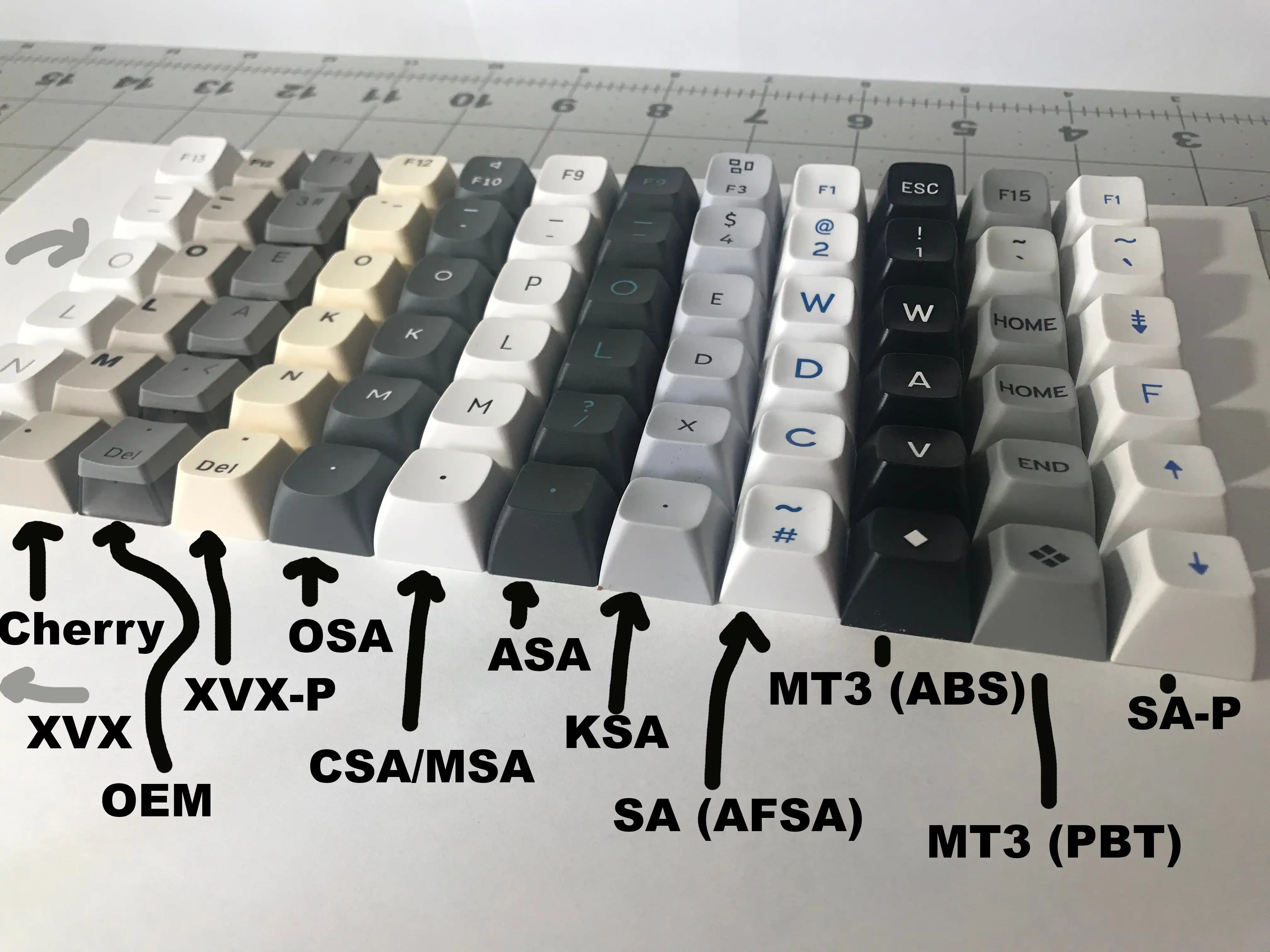
A keycap profile describes its shape and height. Anyone who thinks keycaps are interchangeable — any shape on any keyboard — is wrong. Profile, height and curvature vary considerably and fundamentally shape the typing experience.
This guide explains all the relevant profiles, their characteristics and who they are best suited for.
Sculpted vs. Uniform Profiles
Which is better? It depends on preference. Most beginners find sculpted profiles more comfortable at first.

OEM Profile
OEM is the most common profile in the world. It is found on most keyboards under £80. The height is moderate, with a slight backward tilt angle.
OEM is not an official manufacturer standard — each producer has slightly different dimensions. This makes OEM keycaps less precisely standardised than Cherry.
Cherry Profile
Cherry profile is lower than OEM and was originally defined by Cherry. It is considered more ergonomically balanced: less wrist angle while typing.
Cherry profile keycaps are available from many manufacturers (GMK, ePBT, Infinikey). One of the best options for most keyboard setups.
SA Profile
SA (Spherical All, originally from Signature Plastics) is the tallest of the common profiles. The keys are strongly curved and evoke the aesthetic of 1970s typewriters.
SA requires an adjustment period. Some users love the presence and sound; others find the height tiring. SA is always ABS, available only as group buys or special sets.
DSA Profile
DSA is a flat, uniform profile. All rows are identical — the tilt angle stays constant. This makes rearranging keys much easier.
DSA is flatter than OEM or Cherry. Some users appreciate the minimalist feel; others miss the ergonomic profiling of sculpted variants.
XDA Profile
XDA is like DSA — uniform — but slightly taller and with a wider key surface. The round dish is large, with a less pronounced edge than Cherry.
XDA is popular among users who want a uniform look but prefer more surface area than DSA. Often available as affordable PBT sets.
MT3 Profile
MT3 was developed by Matt3o for @Desk of Matt / Drop. It combines the height of SA with a deep, pronounced dish — the key surface is bowl-shaped.
MT3 requires adjustment, but many enthusiasts describe it as the most comfortable profile for extended typing. Available in both PBT and ABS.
Which Profile Is Right for You?
There is no objective answer. Test if possible before investing.
| Profile | Ideal for | Less suited for |
|---|---|---|
| OEM | Beginners, mainstream replacement | Enthusiasts seeking precision |
| CHERRY | Most users — best all-rounder | Users who prefer tall profiles |
| SA | Vintage aesthetic, typewriter feel | Long sessions without an adjustment period |
| DSA | Programmable / split keyboards | Users who prefer ergonomic profiling |
| XDA | Affordable uniform PBT sets | Users accustomed to Cherry feel |
| MT3 | Extended typing, vintage enthusiasts | Those expecting immediate adjustment |
Frequently Asked Questions
Which material is better: PBT or ABS? ? PBT vs ABS keycaps: full comparison
Best Mechanical Keyboards 2026Related Articles
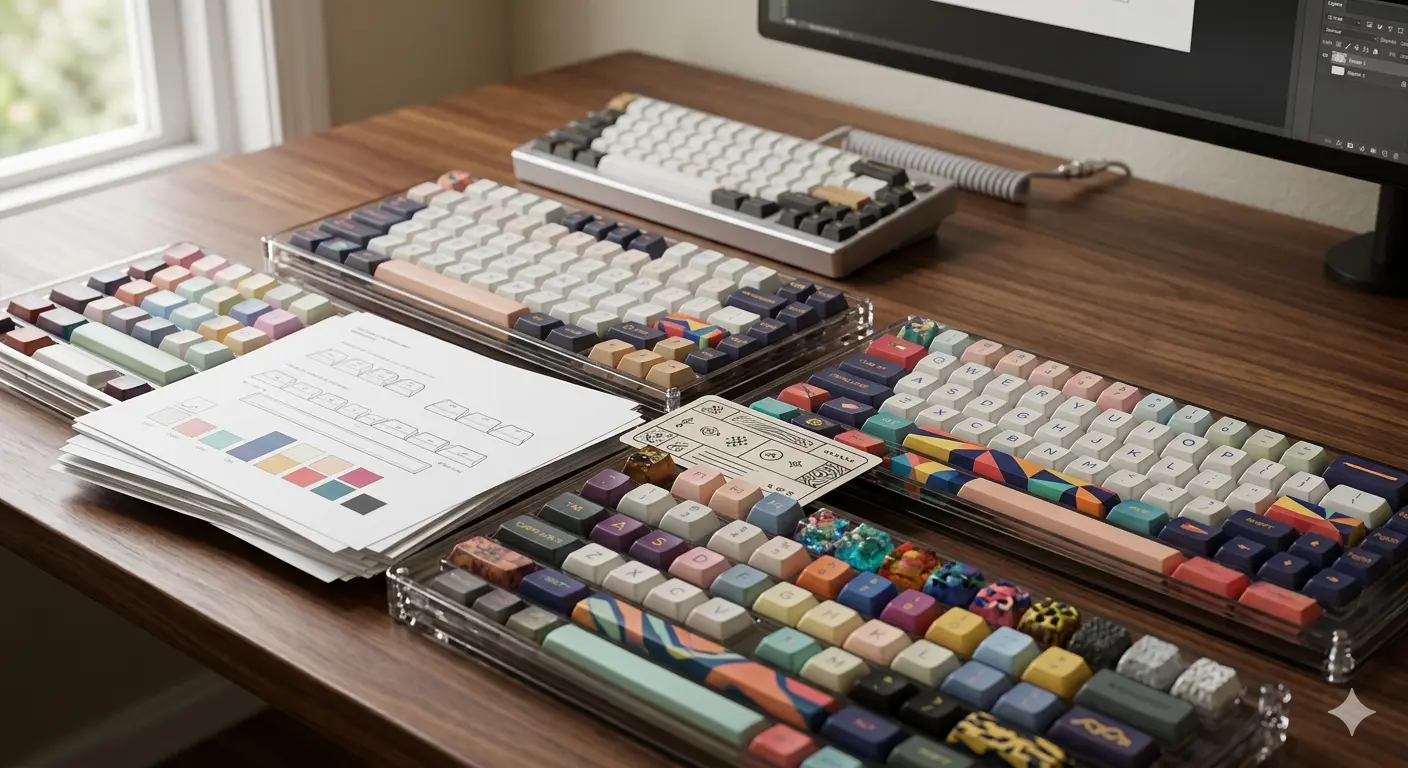
Why Some Keycap Sets Cost $150: Group Buys Explained
Custom keycap sets can cost $150–$250+. We explain group buys, why they're so expensive, the 12-month production timeline, and whether they're worth it.
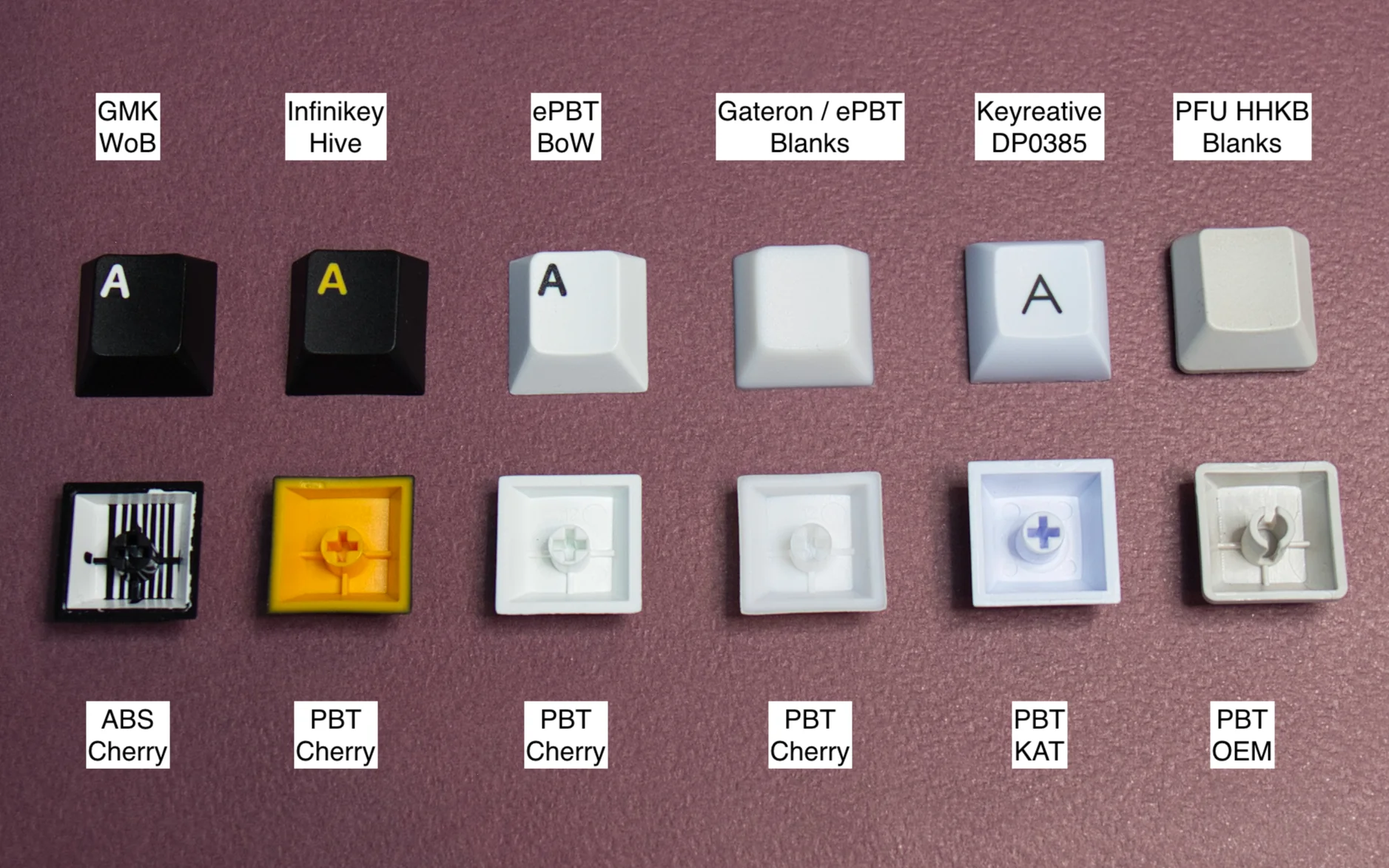
PBT vs ABS Keycaps: Which Material Is Actually Better?
PBT vs ABS keycaps compared: durability, shine, sound, feel and price. Know exactly which material to buy before you spend money on a new keycap set.
How Keycaps Are Made: Double-Shot, Dye-Sub and Laser-Etched Explained
Learn how keycap legends are made: double-shot injection, dye-sublimation, laser etching and pad printing. Which lasts longest and which fades fastest?