Gateron vs Cherry MX: Are Budget Switches Actually Better?
By Jota Martínez •
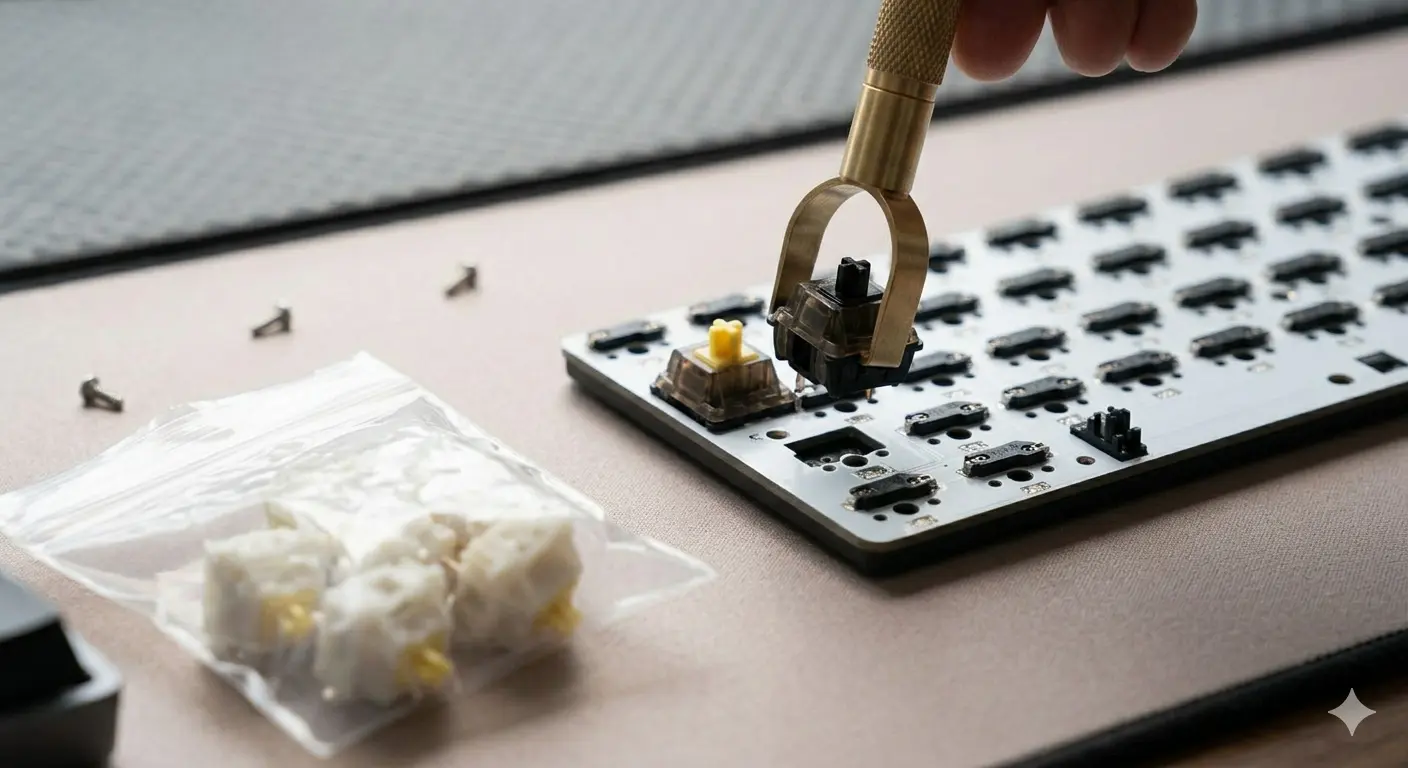
Cherry MX is the most famous switch brand in mechanical keyboards — 60+ years of history, the original MX form factor, and 100 million actuation ratings that defined the standard. Gateron is a Chinese manufacturer that makes Cherry MX-compatible switches at significantly lower prices. For years, the question in the enthusiast community has been whether Gateron is actually better than Cherry MX on the specs that matter.
The short answer: Gateron switches are smoother than Cherry MX out of the box at every comparable price point. Cherry MX offers more consistent quality control and reliability over very long periods. Neither is definitively "better" — the right choice depends on your priorities.
Gateron vs Cherry MX: Direct Comparison
Here's how the two brands compare across every meaningful dimension:
| Factor | Gateron | Cherry MX |
|---|---|---|
| Smoothness (factory) | Noticeably smoother. Less stem-on-housing friction. | More friction. Scratchy compared to Gateron at same price. |
| Stem wobble | Slightly more wobble due to looser tolerances. | Tighter tolerances. Less wobble per keypress. |
| Sound (stock) | Moderate. Slightly softer bottom-out due to housing material. | Slightly crisper. POM housing creates distinct thock. |
| After lubing | Already very smooth. Lube is additional improvement. | Dramatic improvement. Lubed Cherry MX competes with lubed Gateron. |
| Price (per switch) | ~€0.20–0.45. Budget options (Yellow, Red) are very affordable. | ~€0.45–0.75. Premium pricing for the brand name. |
| Variety | Large range: Yellow, Red, Brown, Blue, G Pro, Oil King, Kangaroo, and more. | Standard lineup: Red, Brown, Blue, Black, Speed, Silent. Established, not expanding much. |
| Longevity | Rated 50–80 M actuations. Less field-proven over 10+ years. | Rated 100 M actuations. Decades of real-world reliability data. |
| Compatibility | MX footprint. Works in all MX-compatible keyboards and with all MX keycaps. | Original MX standard. Universal compatibility across all MX boards. |
Gateron: The Smoothness Argument
Gateron's main advantage is factory smoothness. The stem-on-housing friction in Gateron switches is measurably lower than Cherry MX at equivalent price points. Type on a budget Cherry MX Red and a Gateron Yellow back to back, and most people immediately notice the difference: Gateron feels more like silk, Cherry feels more textured.
The newer Gateron variants are particularly impressive. The Oil King pre-lubes the stem with factory oil from production, making it one of the smoothest budget switches available. The G Pro series reduces wobble. These are genuine improvements over the original Gateron Yellow that pushed the brand into enthusiast territory.
Cherry MX: The Reliability Argument
Cherry MX's strongest case isn't smoothness or price — it's consistency and longevity. Cherry has been manufacturing MX switches in Germany since the 1980s. Their quality control is exceptionally tight: the variance between individual switches in a batch is very low. That 100 million actuation rating isn't marketing — there are Cherry MX switches still working after 30+ years of daily use.
For professional, commercial, or industrial environments where keyboards are shared, used heavily, and rarely replaced, Cherry MX reliability is genuinely valuable. For enthusiast or home use, the longevity advantage matters less — most people build or replace keyboards before either brand reaches its rated limit.
The Verdict: Gateron vs Cherry MX
For most buyers: choose Gateron for smoothness and value. If you're comparing Cherry MX Red to Gateron Yellow at the same use case, Gateron Yellow is objectively smoother and costs less. There's no scenario where Cherry MX Red beats Gateron Yellow on feel.
Choose Cherry MX when: you need proven long-term reliability (10+ years of daily use), you're buying for a shared/commercial environment, you need a specific switch model that Gateron doesn't offer (like MX Speed or MX Silent), or you simply prefer Cherry's slightly tighter tolerances and less wobble.
Want to understand switch types before picking a brand? Read our guide on linear vs tactile vs clicky switches. For a specific Cherry MX comparison, see Cherry MX Red vs Blue. For the full switch landscape, our complete keyboard switches guide.
Frequently Asked Questions
Ready to choose your switches?
Our complete switch guide covers Gateron, Cherry MX, Kailh, and every other major option — with specific model recommendations for every use case.
Read the complete keyboard switches guideRelated Articles
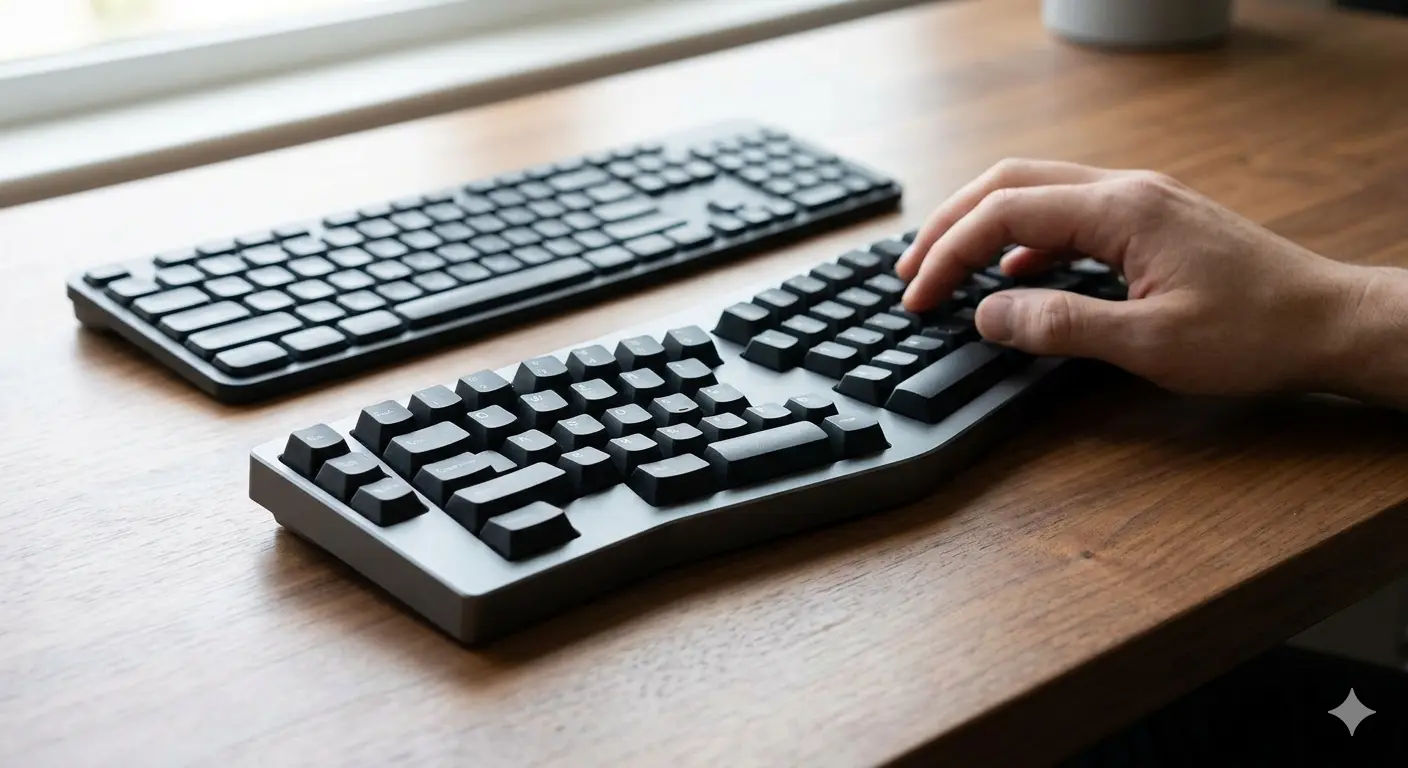
Split vs Regular Keyboard: When Does It Make Sense to Switch?
Split keyboards offer real ergonomic benefits — but for whom? We cover the science, the learning curve, and the models worth trying in 2026.
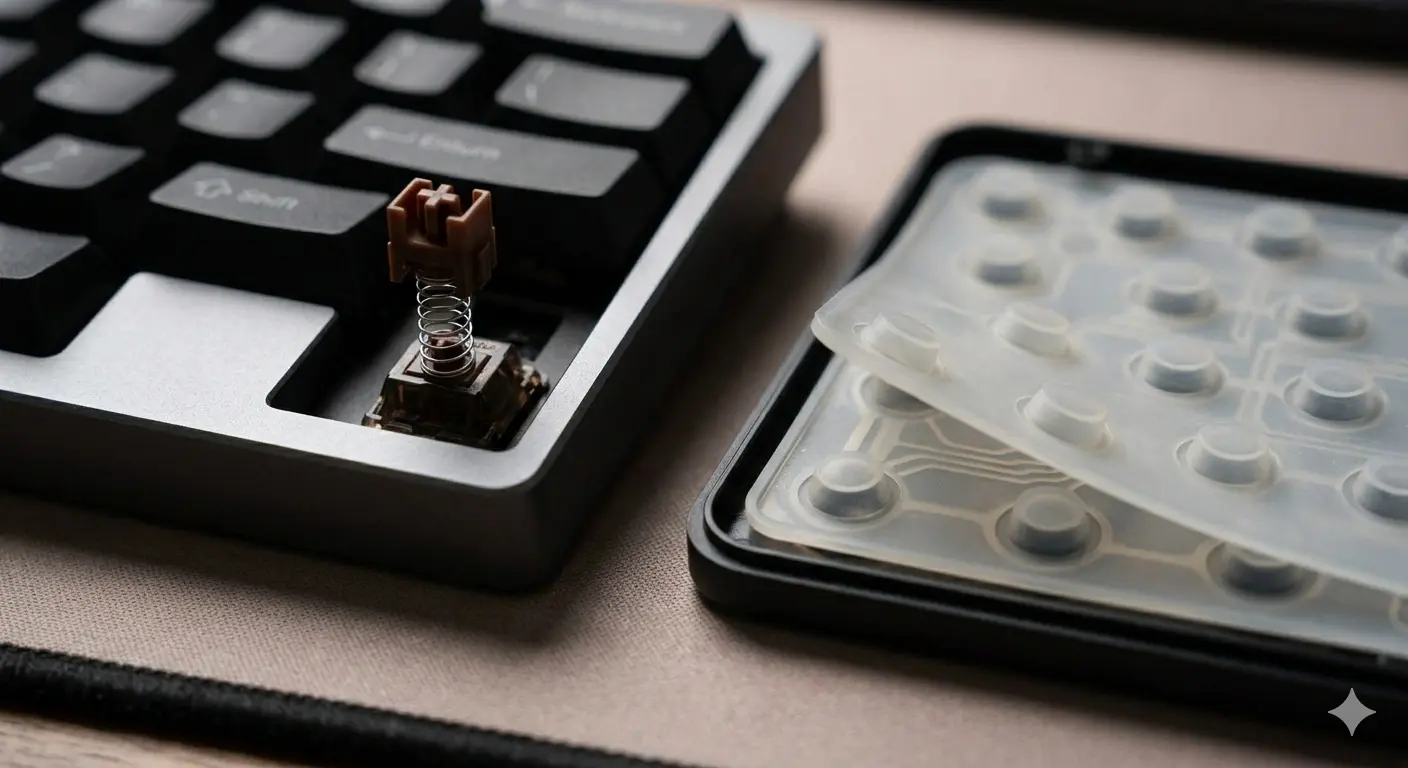
Mechanical Keyboard vs Membrane: An Honest Comparison
Mechanical vs membrane keyboard: lifespan, typing feel, noise, price and customization compared side by side. Which one is actually right for you?
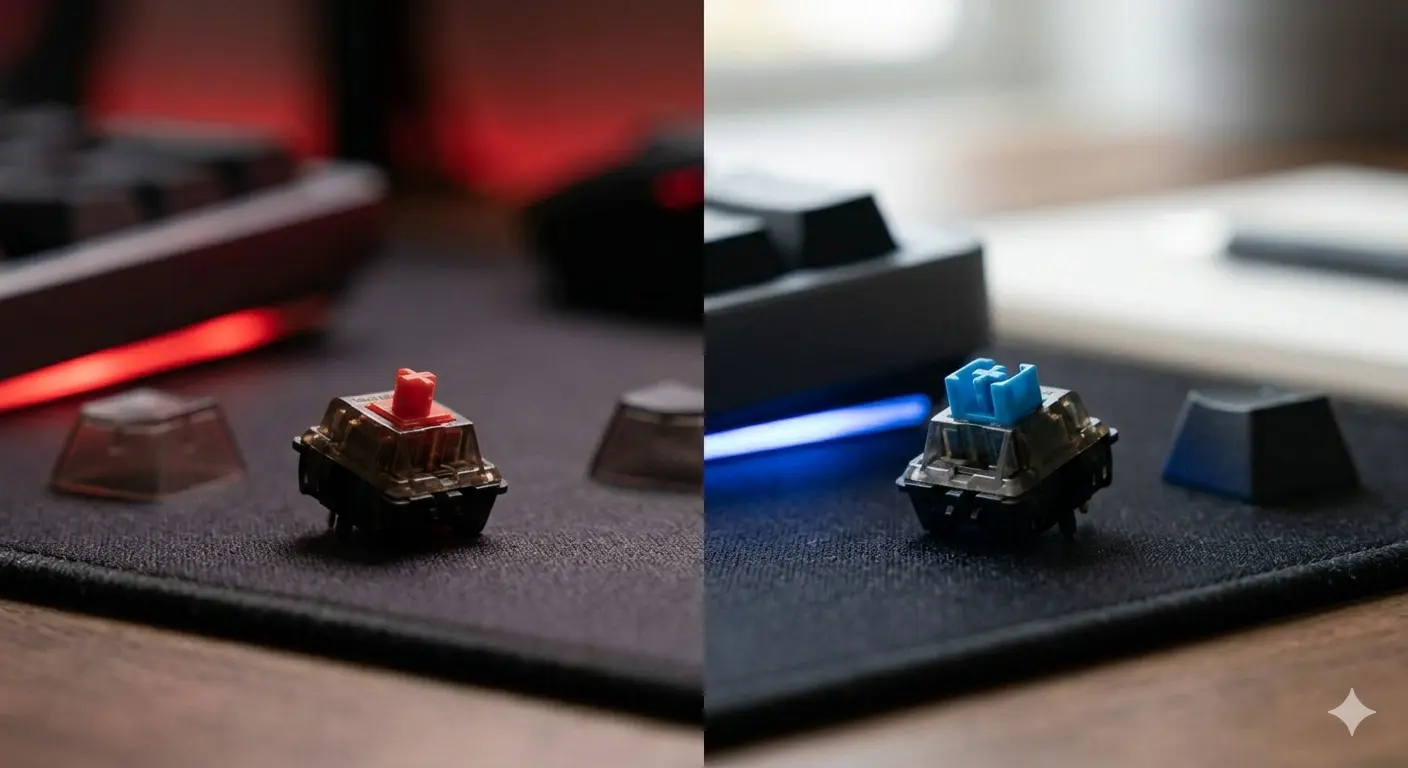
Cherry MX Red vs Blue: Gaming vs Typing Compared
Cherry MX Red vs Blue — the two most popular switches head to head. Specs, sound, gaming performance, typing feel, and which one you should actually get.