The Mechanical Keyboard Endgame: Why It Never Arrives (And That's the Point)
By Jota Martínez • • Best Mechanical Keyboards 2026
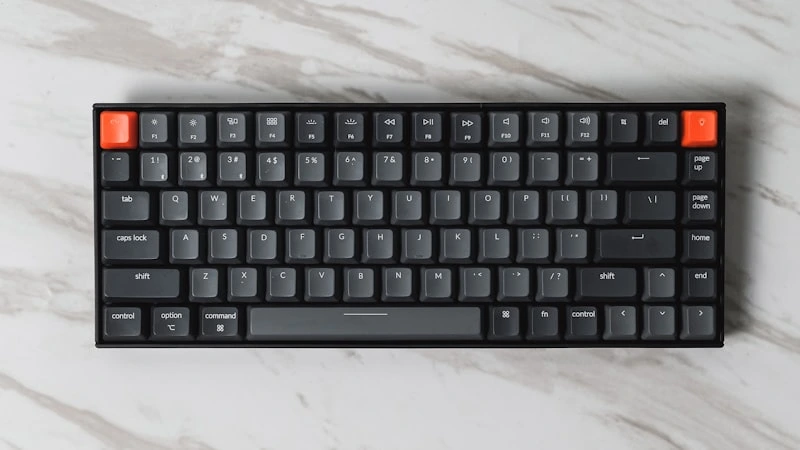
In the mechanical keyboard community, there is a concept called the "endgame." It refers to the one keyboard — the perfect keyboard — after which you will never need to buy another. The keyboard that has everything: the perfect sound, the perfect feel, the perfect aesthetic. The one that ends the quest.
The problem, if you ask anyone who has been in the hobby for more than a year, is that the endgame never arrives. You find a board that seems perfect, use it for three months, and then a new group buy opens, or you try a friend's setup at a meetup, or you watch a sound test on YouTube and suddenly realize your current keyboard sounds "a bit off."
This article is about why that happens, whether it's a problem worth solving, and — if you actually want to get off the upgrade treadmill — what the honest path looks like.
What Is "Endgame"?
The term comes from r/mechanicalkeyboards and the broader keyboard enthusiast community. It's used semi-ironically: everyone in the community knows that the endgame doesn't really exist, and yet everyone continues pursuing it anyway. The joke is the point.
The concept is borrowed from gaming, where "endgame" refers to the content players engage with after completing the main story — theoretically, the final destination. In keyboard communities it took on a specific meaning: the theoretical perfect setup after which you have nothing left to want. The board that satisfies every criterion: sound profile, typing feel, build quality, aesthetics, portability, firmware flexibility.
The reason it's semi-ironic is that those criteria keep changing. What felt like perfect thock six months ago sounds hollow now. The GMK keycap set you waited 18 months for doesn't look quite right on your new aluminum case. The switches you lubed last weekend feel perfect today and somehow different in two weeks. The endgame is a moving target by definition.
The Psychology Behind GAS (Gear Acquisition Syndrome)
The keyboard community didn't invent this. Guitarists have been joking about GAS for decades — the uncontrollable urge to acquire new equipment in pursuit of a tone or feel that's always just one purchase away. Photographers upgrade camera bodies to improve photos that are actually limited by lighting and composition. Cyclists obsess over grams on carbon components while their fitness is the real bottleneck.
In keyboard terms, GAS follows a fairly predictable progression:
| GAS Stage | Symptoms | What You Buy |
|---|---|---|
| Discovery | Your membrane keyboard suddenly feels hollow. You watch 3 hours of YouTube reviews. | First mech keyboard — usually under $100 |
| Awakening | The switches don't feel right. You learn words like "thock" and "tactile bump." | Switch sampler + hot-swap board |
| Escalation | Stock sound is "too clacky." You start watching lube tutorials at midnight. | Krytox 205g0, switch films, foam mods |
| Deep Dive | You join a group buy. Your budget "ceiling" moves upward by $50 every week. | First aluminum case, GMK keycap set |
| Acceptance | You have four keyboards on your desk. You still browse r/mechmarket daily. | Whatever sounds perfect in the latest sound test |
Common "Endgames" That Weren't
If you talk to people who have been in the hobby for 3+ years, a pattern emerges. Every milestone felt like a potential endgame at the time. None of them were.
| Milestone | Why It Wasn't Endgame |
|---|---|
| First mech keyboard | Incredible upgrade from membrane — for about two weeks. Then you notice the switches could be better. |
| First 60% layout | So clean, so minimal. Until you needed the arrow keys for the fifth time in one workday. |
| First aluminum case | Finally, real build quality. Then you discover gasket mounting and the aluminum case sounds "pingy." |
| First custom build | You designed every part yourself. It's perfect. Until you hear someone else's board at a meetup. |
| First $300+ keyboard | Premium price, premium feel. But now you've trained your ears to hear imperfections at this level. |
| First GMK set | The legends, the colorway, the legend depth. Until the next colorway drops that's even better. |
Signs You've Found Your Endgame vs. Signs You Haven't
Here is the most honest diagnostic available:
How to Actually Find Your Endgame
If you genuinely want to reach a stable place in this hobby — rather than riding the upgrade cycle indefinitely — here are the practical steps that actually work:
| Buy second-hand first | The used market (r/MechMarket, local communities) lets you try a $300 board for $150 and sell it for the same price if it doesn't click. This is the fastest way to discover what you actually like without the buyer's remorse. |
| Define your criteria before you shop | Write down specifically what you want: layout, sound profile (thocky, clacky, silent), connectivity, switch type, budget ceiling. If a board doesn't match your written criteria, don't buy it. Your future self will thank you. |
| Set a budget ceiling and respect it | Decide what the maximum you'll ever spend on a keyboard is — and make it a real ceiling, not a guideline. The best keyboards in the $150–250 range cover 95% of what anything more expensive does. |
| Attend a local meetup | Trying 20 different keyboards in one afternoon is worth more than 50 YouTube sound tests. Most major cities have at least annual meetups. r/mechanicalkeyboards and Geekhack list them. |
The Truth Nobody Wants to Hear
The endgame probably doesn't exist. And that is not a tragedy — it's actually the best feature of the hobby. The keyboards get better, the community creates new things, your own taste evolves. If the endgame actually arrived, the hobby would be over.
The only meaningful question is whether you're enjoying the journey or whether the acquisition cycle is making you anxious, spending more than you're comfortable with, or accumulating guilt about unused equipment. Those are the warning signs. If you're genuinely enjoying the discovery, the building, the community — there's nothing to fix.
If you're looking for boards worth chasing, our Best Mechanical Keyboards 2026 is the starting point. Not sure where to even begin? Our How to Choose a Mechanical Keyboard guide walks through the decision systematically. And if you want a specific board that holds up as a long-term daily driver, the Keychron K2 V2 review.
Frequently Asked Questions
Ready to Find Your (Temporary) Endgame?
We've tested and reviewed boards across every tier and use case. See our current top picks — from under $100 to serious enthusiast builds — and find the one that makes sense for where you are right now.
See the best keyboards 2026 ?By Jota Martínez • Published June 14, 2026 • See: Keychron K2 V2 Review ?
Related Articles
What Is a Mechanical Keyboard? The Complete Beginner's Guide
What is a mechanical keyboard? Learn how they work, the anatomy of each part, the three switch types, and how mechanical keyboards differ from membrane.
Keyboard Sizes Explained: 60%, 65%, 75%, TKL, Full-Size and More
Complete guide to keyboard sizes and layouts: 100%, TKL, 75%, 65%, 60%, 40% — what each size includes, what it drops, and which layout is right for you.
Why Are Mechanical Keyboards So Expensive?
Why do mechanical keyboards cost so much? We break down every cost factor — switches, PCBs, cases, keycaps, and why premium keyboards can cost $500+.